
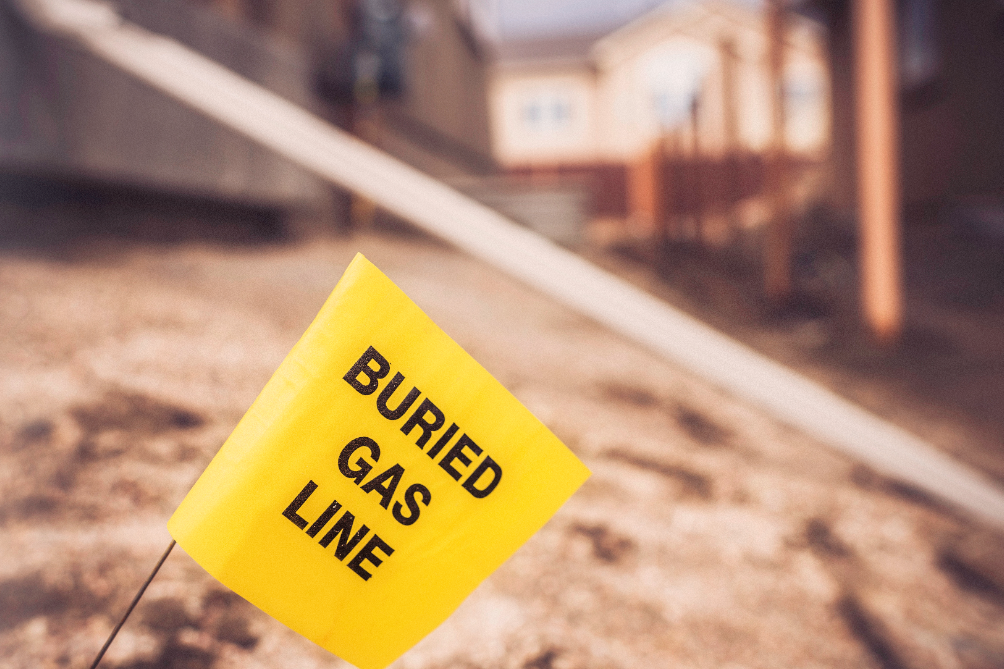
Damage Prevention
Be safe – call first. Accidentally digging into utility lines is extremely dangerous, can be very costly, and can even result in serious injury or death. If you disturb a pipeline, corrosion or other damage could eventually occur, endangering others and disrupting essential utility services that people rely on every day.
If you're planning any work that will disturb the earth, the law requires you to call 811, a one-call notification system for free utility location services before you dig. This call is to take place at least 3 working days prior to the start of the project.
Follow these simple steps to ensure safety during your project:
Call First. Underground power lines, communication cables, gas lines, water lines or other utilities may lie at various depths below the surface of your property or areas of planned excavation. It is important to alert the appropriate state notification center and allow time for the area utility companies to mark the location of their underground facilities.
Respect Marks. It also is important to respect the marks indicating the presence of underground utilities. Excavation should be carefully performed only after confirming that all utilities have marked the location of their facilities. Remember that locating underground utility lines is not an exact science and location marks have varying bands of required accuracy, depending on a particular state's requirements. These can range from 18 to 24 inches from the actual facility.
Call the One-Call System. 811 is the national One-Call number, additionally, all states provide a one-call communication system that provides a phone number for excavation contractors and the general public to call when they intend to excavate, blast or do any tunneling work. For a list of all state One-Call centers click here.
When calling, be prepared to give:
- Your name & telephone number
- The company you represent (if applicable)
- The location of the work
- The type of project
- The date and time the project is scheduled to begin
- Whether or not you'll be using explosives

Property Markings and Ticket Search
If your property is marked and you didn't call 811, there's a reason for the markings. Look below to visit your state specific 811 resource
Rights of Way Corridor
Rights of way corridors extending along the pipeline play an important role in ensuring the integrity and safety of BHE GT&S’s pipeline network. The Right of Way (ROW) Agreement is a legal document through which a landowner grants the pipeline company permission to use a portion of his or her land to install, operate and maintain pipelines.
The ROW Agreement remains in effect even if the property is sold and is binding to the new owners. The ROW Agreement gives the pipeline company the necessary permission to regularly maintain the rights of way along its pipeline systems to ensure pipeline safety.
To ensure pipeline integrity:
Do not erect buildings or structures, or plant trees or other obstructions on the pipeline rights of way.
Do not excavate, change the grade or impound water within the rights of way without the company’s permission.
Do not move heavy equipment or logs across the rights of way and avoid blasting within 1,000 feet of the pipeline without the company’s approval.
Although building on the rights of way is prohibited, under certain conditions roads, railroads, streets, cables and other utility lines may cross the pipeline. In these instances, BHE GT&S will work with the owner, developer or contractor to accommodate such construction. The owner and/or developer will be required to pay any costs necessary to ensure the pipeline meets all regulations. BHE GT&S asks that landowners familiarize themselves with the content of their ROW Agreement and abide by its content.
Safe Operation of Pipelines
To ensure the safe operation of its system, BHE GT&S employs highly trained, highly experienced employees to operate the system in accordance with federal, state and local government regulations. Our employees maintain a commitment and dedication to ensure we operate our facilities according to the highest safety standards.
Safe operation of the system is our primary consideration. We closely regulate the pressure at which our system operates to ensure that it meets the requirements established by the Pipeline and Hazardous Material Administration (PHMSA). Doing so helps maintain the integrity of the pipeline and ensures the reliable, safe operation of the system.
The pipeline system is monitored 24 hours a day, seven days a week by sophisticated computer, telecommunications equipment and trained Gas Controllers. If problems are detected, appropriate action can be taken immediately.
Pipeline operators make use of extensive safety systems and programs. These can include:
- Computer-assisted control centers capable of detecting and interpreting pressure or flow changes in a pipeline.
- Regular air patrols in low-flying aircraft by experienced pilots and observers.
- Periodic ground patrols for detailed inspection of the pipeline environment.
- Highly trained maintenance personnel located at strategic points along the pipeline.
- Continuous monitoring of the products flowing through the pipeline.